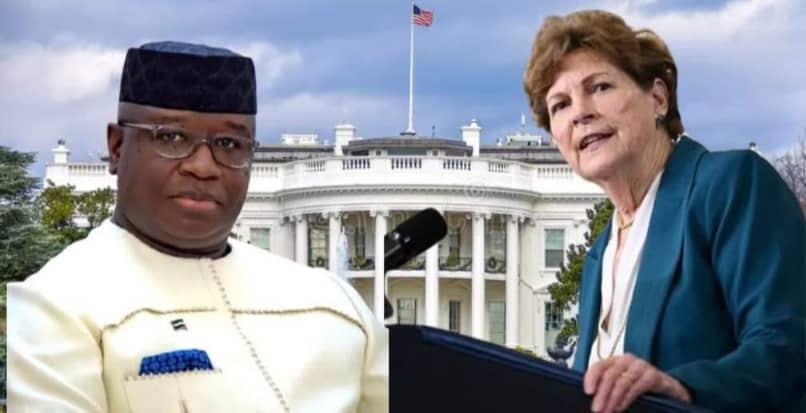
U.S. SENATOR RAISES ALARM OVER SIERRA LEONE’S HANDLING OF THIRD-COUNTRY DEPORTEES:
By David K.Fengai
FREETOWN — Concerns are mounting over Sierra Leone’s handling of migrants deported from the United States under the country’s Third Country National Arrangement, after U.S. Senator Jeanne Shaheen questioned whether Freetown is fully complying with its commitments.
Shaheen, the ranking Democrat on the U.S. Senate Foreign Relations Committee, raised the issue during a committee hearing on the nomination of career diplomat Daniel Travis to become the next U.S. ambassador to Sierra Leone. She cited reports alleging that some migrants transferred to Sierra Leone were subsequently returned to countries where they had previously expressed fears of persecution.
“There is now credible evidence that Sierra Leone is violating this commitment,” Shaheen said during the hearing.
Sierra Leone began receiving deportees under the arrangement in May 2026, with an initial group of nine migrants from Ghana, Guinea, Senegal and Nigeria. A second group reportedly arrived in June. The programme is backed by a $1.5 million U.S. government grant, while Kenvah Solutions (SL) Limited has been contracted to provide accommodation, food, healthcare and other humanitarian assistance.
The arrangement reportedly permits Sierra Leone to receive up to 300 eligible ECOWAS nationals annually, with a monthly limit of 25 people. The migrants are intended to remain temporarily in Sierra Leone while arrangements are made for onward movement or repatriation.
However, the programme has attracted growing scrutiny because some deportees reportedly fear persecution or serious harm if returned to their countries of origin. Lawyers representing some migrants have argued that repatriation could expose them to precisely the dangers they had sought protection from in the United States.
During the hearing, Travis pledged that, if confirmed, he would press Sierra Leonean authorities to honour the terms of the agreement fully. He told the committee that he would advocate for compliance “to the letter.”
The controversy could become an early diplomatic test for Travis should the Senate approve his nomination. It also places renewed attention on how Sierra Leone balances its international commitments, humanitarian responsibilities and relations with the United States.
While Sierra Leonean officials have described the arrangement as a temporary and structured humanitarian mechanism, the allegations have introduced questions about safeguards, transparency and the treatment of vulnerable migrants.
The issue comes against the backdrop of broader cooperation between Washington and Freetown in development, governance, healthcare and economic affairs, making the deportation arrangement a potentially sensitive issue in the wider U.S.–Sierra Leone relationship.