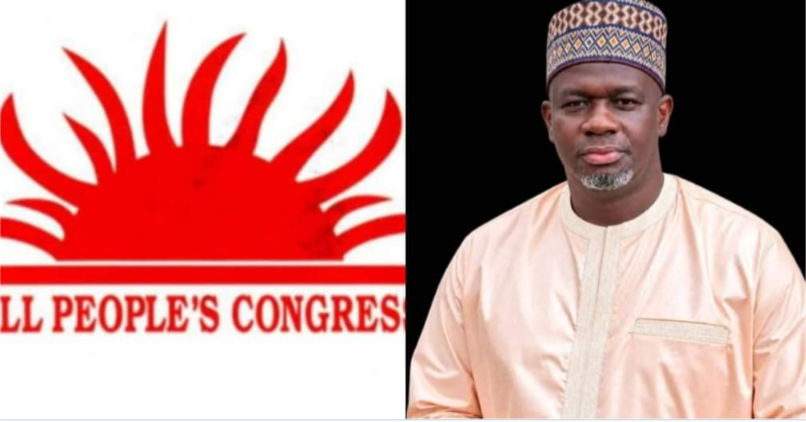
“APC EXECUTIVES ARE NOT FOR SALE” — SORIE SESAY WARNS AGAINST OWNERSHIP CLAIMS
All People’s Congress (APC) presidential aspirant Sorie Sesay has issued a strong warning against party stakeholders treating newly elected constituency executives as personal or factional property, urging members to protect the unity and institutional integrity of the party ahead of its much-anticipated internal leadership contest.
In a statement issued on August 4, Sesay cautioned that attempts to portray constituency executives as belonging to particular aspirants, district leaders or regional stakeholders could deepen divisions within the APC and create difficulties for the party after the flagbearer contest.
“Our constituency executives were not elected to become the property of district or regional leaders, stakeholders, or flagbearer aspirants. They were elected as officers of the All Peoples Congress,” Sesay stated.
He acknowledged that presidential aspirants have every right to engage constituency executives, present their visions and compete for their support. However, he warned that such engagement should never be confused with ownership.
“Aspirants should engage them, persuade them, and compete for their confidence,” he said, stressing that there is a fundamental difference between earning someone’s support and claiming ownership of them.
Sesay’s comments come at a critical moment for the APC, as newly elected constituency executives are expected to play an important role in grassroots mobilisation and the party’s internal political process ahead of the selection of its 2028 presidential candidate.
The aspirant, a former Ministry of Finance official with more than two decades of public service experience, also challenged the notion that financial assistance provided during constituency elections should automatically translate into political allegiance during the flagbearer race.
According to Sesay, constituency executives have responsibilities that extend beyond individual political relationships. Their mandate includes organising the grassroots, mobilising party members, strengthening structures and advancing the broader interests of the APC.
“Support received during an election should not automatically be confused with allegiance in the flagbearer contest,” he stated.
Sesay has been presenting himself as a unifying candidate focused on inclusivity, institutional strengthening and practical solutions, while continuing consultations with grassroots supporters across districts, including Port Loko and Kono.
He further warned that excessive factionalism could damage the very party structures that the eventual APC flagbearer would need to rely on if elected to govern.
“Aspirants will come and go. Internal contests will begin and end. But the party structures must remain capable of working together,” Sesay said.
His remarks come as the APC prepares for a potentially intense flagbearer contest, with several aspirants seeking the party’s nomination for the 2028 presidential election. Against the backdrop of previous internal tensions and political disputes, Sesay’s appeal places renewed emphasis on unity, institutional loyalty and the need to distinguish legitimate political support from claims of personal ownership.
For Sesay, the message is clear: political support may be earned, but the APC belongs to its membership—not to any individual aspirant, stakeholder or faction.