CLEAN FUEL, CLEANER FUTURE: NPRA CHARTS SIERRA LEONE’S BOLD ROAD TO ECOWAS STANDARDS:
By David K.Fengai
Sierra Leone has taken a significant step toward transforming its fuel and transport sector after a two-day national workshop in Freetown ended with renewed commitments to strengthen fuel quality regulations, reduce vehicle emissions and improve air quality across the country.
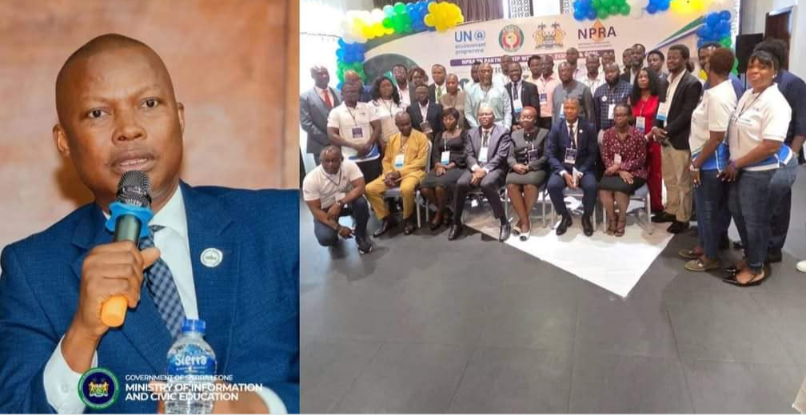
The workshop, organised by the National Petroleum Regulatory Authority (NPRA) in partnership with the United Nations Environment Programme (UNEP) and the ECOWAS Commission, was held from August 3 to 4, 2026, at the Atlantic Hotel, Lumley Beach. It brought together government officials, development partners, environmental experts, Oil Marketing Companies and other key stakeholders to discuss the country’s transition towards cleaner fuels and more environmentally friendly vehicles.
Participants examined strategies to improve fuel quality, reduce harmful vehicle emissions, strengthen regulatory frameworks, protect public health, safeguard the environment and promote sustainable transportation. Discussions also focused on regional energy security and the potential benefits of a more integrated West African hydrocarbon market.
The initiative is guided by two ECOWAS directives adopted by the Council of Ministers in September 2020, aimed at harmonising automotive fuel specifications and vehicle emission standards across West Africa.
Delivering the keynote address, NPRA Director General Brima Baluwa Koroma described the transition as a multi-sector national and regional effort. He warned that vehicle emissions and poor-quality fuels remain significant environmental and public health concerns.
Koroma disclosed that Sierra Leone currently operates under a fuel specification of 1,000 parts per million (ppm), while the country’s petroleum pricing formula is based on 10 ppm fuel, which is even below the ECOWAS target of 50 ppm. He said Oil Marketing Companies participated in the workshop as part of preparations for meeting the emerging standards.
According to the NPRA Director General, the Authority intends to incorporate the ECOWAS fuel specifications into its licensing framework beginning in 2027, marking a major step toward domesticating the regional directives.
He stressed that successful implementation will require cooperation among government ministries, departments and agencies, regional institutions, Oil Marketing Companies, transport unions, vehicle dealers, civil society organisations and the media.
Representing UNEP, Jane Akumu highlighted the health and environmental importance of cleaner fuels and vehicles. She explained that low-sulfur fuels, together with modern vehicle technologies, can significantly reduce harmful pollutants associated with respiratory and cardiovascular diseases, lung cancer and premature deaths.
Akumu also noted that cleaner fuels help modern emission-control technologies operate more effectively, particularly in densely populated urban areas. While reducing sulfur levels alone does not directly cut carbon dioxide emissions, she said cleaner fuels can facilitate the adoption of more fuel-efficient and lower-emission vehicles, helping countries address greenhouse gas emissions from transportation.
For the ECOWAS Commission, Yao Barnard Koffi said the regional transition is anchored in Directives C/DIR.1/9/2020 on harmonised automotive fuel specifications and C/DIR.2/9/2020 on vehicle emission standards.
He stressed the need for member states to strengthen national legislation, improve regulatory oversight and ensure effective enforcement through coordinated action.
The workshop therefore represents more than a technical discussion—it signals Sierra Leone’s determination to align its petroleum and transport sectors with regional standards while protecting public health, supporting cleaner cities and contributing to sustainable economic development.
If successfully implemented, the roadmap could mark a decisive shift toward cleaner mobility and stronger environmental regulation, positioning Sierra Leone more firml